Sunday, May 23, 2010

Day 6

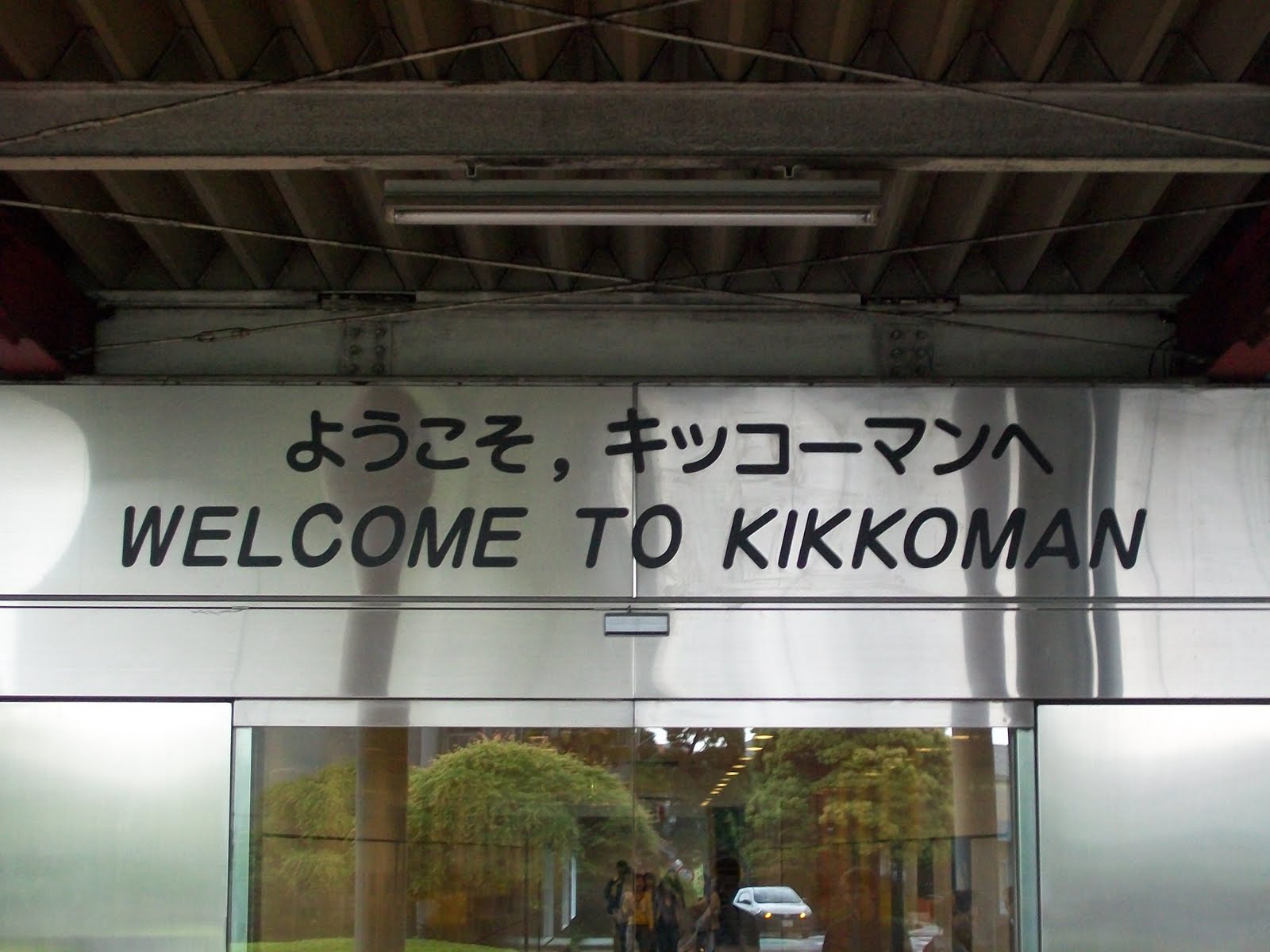
Following a short night’s sleep, the group departed via bus for Kikkoman, the famous Japanese soy sauce company. Kikkoman holds 80% of the US market share for soy sauce, and has been making soy sauce for over 300 hundred years.

(The Kikkoman Logo)

The morning began with an analysis of Kikkoman’s logistic strategy. Their logistic and operational strategies were different from many of the companies we have already visited. Kikkoman does not outsource their logistics, and owns the company that handles logistics for their operations. Kikkoman’s operations were unique because they represented the middle of integration of technology in process. Years ago, the entire process was performed by manual labor. This process in particular is very labor intensive, and while I did not ask, I can imagine it would have taken hundreds of workers. Within the past ten years, the entire process has become automated, and as a result, much more efficient. Giant machines are used to mix, stir, and press the soy sauce. Now, only 200 workers are needed to maintain the entire facility.

After the logistics presentation, we went to lunch in a botanical garden. We did not explore the gardens because the weather was not nice enough and we did not have enough time either. I found out that it is not uncommon for it to rain here in Japan during this time of the year, as it is the monsoon season. For lunch I had a pork curry, which was quite good, although rather expensive.

(Pork Curry)

Having finished lunch, we moved to the facility where Kikkoman makes their famous soy sauce. While the process takes a little over six months, we were able to view different batches in all of the various stages. The process begins with the mixing of soy beans, wheat, and a special bacteria made by Kikkoman. This mixture is cooked and left to set for 3 days, allowing the bacteria to mix in with the grains. After 3 days, this mixture is mixed with salt water and ferments for 6 months. It is then placed in a nylon sack and the soy sauce is pressed out by a machine. The byproducts include soy oil and cakes that are used for cattle feed, so very little is wasted. After our tour finished, our generous hosts at Kikkoman allowed us to have some soy ice cream, which I thought was very good, although some of my classmates did not. They also gave us a free bottle of soy sauce, which will come in handy next week when we will occasionally cook for ourselves.

Unfortunately, we never did wind up getting sumo tickets, but I am watching them wrestle on TV as I write this. The traditions involved in the process are fascinating. Every match is preceded with a ritual ceremony that often takes longer than the actual match. The enormity of the wrestlers is almost beyond belief, but it does not seem that the largest always wins. Many matches do not last longer than 15 seconds, and if they do the action almost seems to pause as they catch their breath.

(They are huge!)

It is weird to think that I have now been in Japan for a week. At times, it seems like we have been here for longer, since we do so much in each day, and sometimes it feels like we have hardly been here at all. There is so much to see and do and so little time to do it that one can easily feel overwhelmed. I am sure that this trip will be over before I know it, and I am enjoying every minute of it.

Wednesday, May 19, 2010

Day 5

Today was the first bad weather that we have had for the entire trip. It was overcast and rainy when our day began at 8:30. Displaying a classic failure in logistics, the bus driver and our professors had miscommunicated, and the bus came 45 minutes later than it was supposed to.


After getting on the bus, we began the drive to Terrada, a growing warehousing company in Japan. Terrada’s basic business model involves providing space for people to store goods, especially specialty goods. They cater towards the upper class of society with special rooms for storing wine and safety deposit boxes. The concept of storage is important in Japan, because homeowners do not have a lot of space in their houses for their excess goods.

(The group in one of Terrada's wine cellars)

Terrada has turned four prior warehouses into restaurants, and we went to one of those for lunch. A microbrewery, T.Y. Harbor Brewery, provided such a good lunch that I only snacked for dinner tonight. While we were rushed to leave to get back on the bus, I was able to get my peanut butter chocolate brownie to go. It was delicious!

We arrived at our next destination after an hour on the bus. It was a warehouse for Co-op, a food distributor that operates on a new concept here in Japan. Customers of the Co-op buy a share in the Co-op which costs 500 Yen ($5). If they desire to leave the Co-op, they can have their money refunded. The co-op specializes in all types of food, and the warehouse we visited processes the frozen food. Another key practice of Co-op is to ship products directly to customers if desired.

(Getting ready to go on the tour)

The Co-op’s warehouse used some technology that we have not seen in any of the others yet. The most interesting was the pick-to-light system. The system reminded me of Japanese games like DDR or Rockband. The workers are at stations with X amount of bins in them. Each bin has a light under it, and the conveyor belt has stations with lights as well. When a product is needed to fill an order, the light under the bin will light up and the worker will grab it. The worker knows where to place the product on the line because the corresponding position on the line also lights up. While it is similar to a general assembly line, it made it seem more fun, at least to an outsider like me.

Another thing worth mentioning about our tour is that the warehouse is very, very cold. It must be kept this way to keep the products frozen, but it also did its best to freeze the visitors. When we finally finished the tour, I could not hold my hands steady to take good notes until they thawed out some.

(brrrrr... -25 Celsius)

Our nights in Tokyo are growing few, and tonight we are going to go to a Karaoke Bar. These bars are very popular in Japan, and we will get to see what kinds of voices the people in our group have. Everyone is going to go, and there have been rumors that a talent scout will be present, so I am being sure to bring my golden voice.

Day 4

Today we left the hotel at 9:00 to begin the start of a very full day. We got on a bus and traveled to the Japanese headquarters of Kuehne+Nagel, a German Third Party Logistics (3PL) company that has operations throughout the globe. The visit was conducted by Mr. Smalley, a MSU alum and the contract logistics manager. We had the opportunity to learn about the processes of a 3PL company and the specific strategy that Kuenhne+Nagel Japan uses to gain part of the market share when competing against much larger Japanese firms.

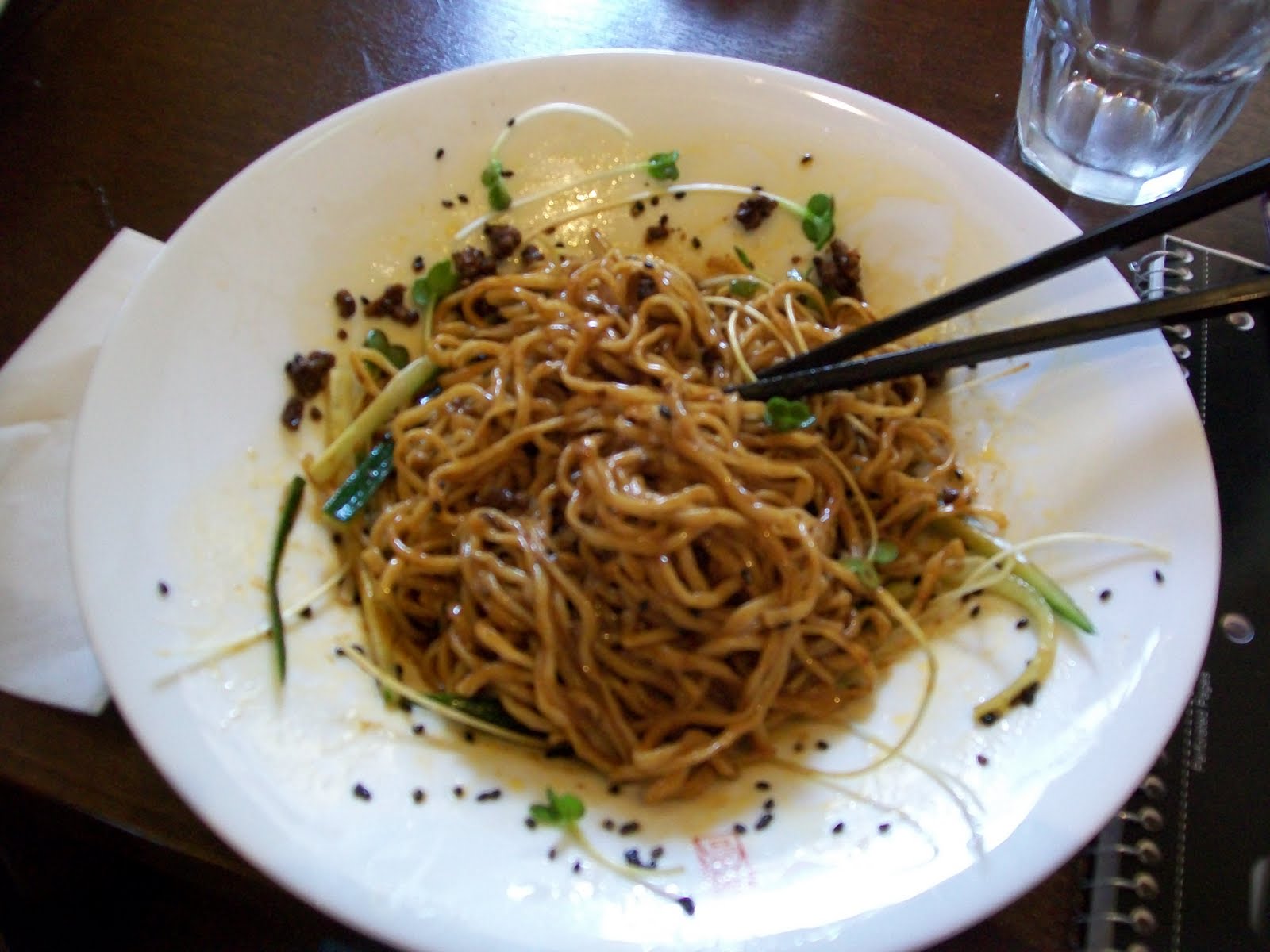
After the meeting and a lecture by Dr. Ross, it was time for lunch. In a strip mall, my small group found a place to eat Chinese. While I am sure that it is not the same as it might be in China, it sure did seem more authentic than “Chinese” food in America. I had a spicy dish of cold noodles and beef, which was quite delicious.

(Yum!)

After lunch, it was back on the bus for a trip to one of Kuenhe+Nagel’s customers, BMW Japan. Kuenhe+Nagel manages BMW Japan’s warehouse. The warehouse used several pieces of modern technology to manage inventory, including a conveyor belt to keep the line flow process running and RFID and labeling to track every part through their computers. BMW Japan prides itself on servicing the customer, and does this through providing the product in a timely manner.


After leaving the BMW plant, it was time to move to our final presentation of the day by Nichifutsu Boeki KK (NBKK), a French based importer that operates in Japan. NBKK offered a unique insight into how a company introduces a foreign product in the Japanese market. The success of this product is important to NBKK because they buy the product from its producer, making the risk entirely theirs. It sounded like it would be a fun and exciting industry to be involved with.

The plant insight that we received today opened my eyes to the challenges of doing business in Japan. Both Kuenhe+Nagel and NBKK face challenges that other units in their global firms do not have to worry themselves with. Japanese consumers have a reputation of being extremely picky when it comes to quality. When the packaging box on a good is damaged, they assumed that the good inside has been damaged as well. They seem to be more likely to file complaints than consumers in America. This forces firms to pay more attention to their products’ quality, and sometimes this translates into entire global operations adopting higher standards of quality to match the Japanese expectations. Japan also has strict laws on doing business within the country. In fact, many companies would rather do business in China for this reason. NBKK must worry about the differences between Japanese food laws and the laws set by the American FDA and the European Union governing body as well. The declining population base presents another issue, as the population pyramid is growing top heavy. The older Japanese population is too large for the smaller younger population to support. The younger generation is also experiencing an aversion to dirty, dangerous, and hard labor, making it difficult for firms like Kuenhe+Nagel to find the manual laborers that they need. Hearing about the challenges to doing business in Japan from those who experience them firsthand is an excellent way to learn.

Day 3

Today we were finally awake before the Tokyo sun, getting up at 4:00 to bus to our first plant tour. We went to Tsukiji, a fresh fish warehouse. The market opens so early because the fish move out of the tanks and onto Tokyo’s dinner plates by the evening.

We toured Tsukiji from 5:00 until 7:40. Throughout the night, fresh fish arrived from the various suppliers and were organized by the workers. The suppliers are in charge of the inbound shipping process. The warehouse is open 24/7 to accommodate the high volumes that move in and out each and every day. Around the time when we toured, wholesalers that purchase the fish from the warehouse were wandering around the floor, examining the fish and taking notes on lot numbers. The process then goes to auction, where sellers and buyers haggle over price. Once the fish are sold, the buyers are in charge of shipping the goods back to wherever they would like them, whether restaurants or reselling to the public.


The number one product of the warehouse is fresh tuna. The tuna is flown in from boats around the world, and is auctioned off fresh. The individual fish can weigh up to 500 lbs after being dressed and cleaned. On average days, 1,200 tuna will be sold every day, and during peak season up to 3,000 tuna can be sold. The tuna can sell for as high as $60,000 per fish.


(The Tuna Auction)

After the tour ended, we grabbed breakfast. Mine consisted of McDonalds, mainly because it is so much cheaper than many of the other locations in Tokyo. I was able to eat for less than five dollars, compared to some sushi restaurants that were offering a thirty dollar breakfast.

Once breakfast was eaten, the group moved to the Isogo Frozen Food Company by bus. Isogo is in the downstream supply chain of Tsukiji. The tuna that wholesalers buy in Tsukiji can be processed there. The warehouse was 35 years old, but it represented the first cold storage unit that used LNG (liquid natural gas) technology. This technology is important in Japan because Japan does not possess high amounts of natural resources. Natural gas is cooled in places like Saudi Arabia or Iran to the point that it turns into liquid. It is then shipped to Japan, where Isogo has a partnership with Tokyo Gas, an electric company. The LNG is heated in the factory, and the cold air is used to cool the fish being stored while the gas vapor is used by Tokyo Gas to create energy.


(Tuna Frozen at -60 Celsius)

This technique, while it saves money, also demonstrates how environmentally conscious the Japanese are. There are very few emissions from this technique, because the cold air is derived from this chilled liquid. We were also able to observe the fishing methods used to catch tuna by Japanese ships, which are much more environmentally friendly and sustainable than those used by American fishing boats. The Japanese ships use extremely long lines with hooks on them that will only catch the mature, large tuna, while in America boats spread circular nets and haul in everything that falls within them, catching some small tuna in the process. I could tell during the tour that the Japanese are hoping that someday everyone will use these fishing methods to preserve both the ecosystem and the tuna supply for future generations. Also, the warehouse at Tsukiji is attempting to relocate but cannot because of environmental concerns put in place by the government.

Our tour ended at 1:00, and it took an hour to bus back to our hotel. Everyone in the group was exhausted, and many napped for several hours. Tonight the plan is to check out Roppongi, a popular subsection of Tokyo. The entire group is going, and it will hopefully be a fun time. First we must find a way to get there and get back, since it is close to forty miles from our hotel. Logistics at work!

Tuesday, May 18, 2010

Day 2


Today we met in the lobby at 8:30 to begin our day. We walked to the subway station, and took the subway to Ryogoku, Tokyo’s upscale shopping district. During our free time, we walked down the main street of this area, filled with popular fashion stores such as Armani and Louis Vutton. The trendy stores and high prices seem to be similar to scenes that one can see in New York or Milan. Jaguars and Porsches cruised up and down the street, and well dressed Japanese filtered in and out of the stores.

During our free time, my group walked up and down this main road. While gawking at the high prices and elaborate store fronts, we discovered a group of Japanese waiting in a line. We were curious to see what the line was for, so we followed it. It wound up being for a Western style restaurant called “Eggs N’ Things.” It was weird to think of people in different cultures going out to eat “American” style food in the same way that we may go out for Chinese at home.

Going down the side alley also allowed my group to discover the side shops that were off the main path. These shops were not at all like the designer shops on the main street. The goods they offered were less expensive and appeared to be aimed at tourists. While I did not buy anything at any of these stores, I still found them very interesting.

After leaving the shopping district, we took the subway to the MSU alumni reception ceremony. Besides our supply chain study abroad, the reception included former MSU alumni and a telecommunications study abroad. Upon arriving, our group was warmly greeted by our Japanese hosts. We began eating and mingling with both our hosts and the other guests. The mingling period reinforced my view of the Japanese being generally friendly. It did not seem as if anyone could stand by themselves for long without being approached by one of our kind hosts. The language barrier does not deter their efforts either, and they do not seem offended that we do not speak fluent Japanese as is the case in other cultures.

After several hours and closing with a traditional Japanese goodbye which involved both clapping and chanting, we headed back to the subway to travel to the Edo-Tokyo museum. There is currently a large Sumo wrestling tournament taking place in Tokyo right next to the museum, and several members in the group had hoped to purchase tickets. Unfortunately, we were told at the alumni reception that all the tickets would probably be sold out, and that instead we should try later this coming week with the assistance of a helpful alum. Hopefully we will be able to get tickets!

So, instead of going to the Sumo tournament, we went to the museum instead. The museum is built in the shape of a traditional Japanese grain silo. The silo is raised above the ground to prevent animals from getting in and eating the grain. The museum documented the history of Edo-Tokyo from modern times to the time when samurai helped govern the land. (It may be important to note here that Tokyo was once called Edo in older times.) It was one of the few places were any sign of World War II could be found. In fact, our hotel was built on top of the prison where Japanese war criminals were held while awaiting trial. It seems that many actions were taken to both forget and erase wartime past and move to the present.

After leaving the museum, we had free time in the area. A small group of us decided to remain instead of returning to Ikebukuro. The district where we were is known as Tokyo’s electronic district. The streets were lined with stores such as Bose, Sony, Dell, and Intel. In visiting these stores I was surprised to realize that while the technology is very advanced, the prices are not much lower than prices in the United States. It may have to do with the fact that Tokyo is a large city, and even in the United States things are more expensive in bigger cities.

For dinner we stopped at a Turkish stand and bought pitas stuffed with beef, lettuce, tomato, and cheese. They were so delicious that I decided to have a second one! This Turkish stand led me to realize that Tokyo has some international flair in the same way that many of the world’s largest cities do. It offered a refreshing change from rice and noodles, which I have had for my past few meals.

Day 1

I arrived in Japan yesterday at around 6:00 local time. It was a very long plane ride, and I am still suffering from jet lag. It is hard adjustment when Japan is thirteen hours ahead.


(Night view from my hotel room)


The sun rises very early here, due to the lack of daylight savings time. Combined with the jet lag, it woke me up at 4:45 this morning. We ate breakfast in the hotel, which offered a combination of Western and Japanese style dishes. The Japanese breakfast appeared to be mostly dinner foods, so I decided to stick with the Western breakfast.

After breakfast, we met in the lobby and headed to the top of our hotel, which is one of the taller buildings in our sector of Tokyo. In the bottom of the hotel is also a mall. On the 60th floor of the hotel is an observation deck. From the observation deck we observed both the logistics and sights of Tokyo. The logistics included trains, raised highway systems,

and waterways, while the sights included the Tokyo Tower, the Tokyo Dome, and several shrines and parks. From the observation deck, it is apparent that space in Tokyo is at a premium. Rooftops are used to play soccer, basketball, or tennis. Houses are very close together, and the only very large spaces of green are near cemeteries or shrines.


After leaving the observation deck, we began our train journey to a Japan museum. On our way, we bought lunch, which was some form of sushi for everyone. After lunch, we continued to the Tokyo subway station, which is one of the main forms of transportation in the city. While it may be a convenient way to get around, it is not always easy, as I will detail later.


After arriving at the museum, we began our tour, which highlighted the simple life that the Japanese live. The houses were very plain with not much room for storage. The tour was actually quite serene, and several group members mentioned that it would be a nice place to retire to. We will get to spend a night in a traditional style home when we stay at the Buddhist temple later in our trip.


After the tour, we took the train back to Tokyo. We had the rest of the evening free. A group of us decided to stay in the Shinjuku district and search for a traditional style tea house. Our search began with quite an adventure. We took a wrong turn in the subway station and were unable to find an exit for 45 minutes. With the help of some friendly Japanese, we were finally able to backtrack and exit the subway. Their help characterizes the helpfulness of many Japanese. It seems that most are both eager and willing to help anyone who asks to the best of their language ability.


While we did not find a tea shop, we did enjoy the sights. The pachinko bars were common sights. Pachinko is a game very similar to American slots. Players buy metal balls and funnel them down a machine, which allows some of the balls to come through, some of them to earn bonuses, and some to be absorbed by the machine. When we went into the bars, they all seemed quite full. There was a saying in one that encouraged the visitor to “Forget the troubles of the outside world.” This made me wonder if the bars are so popular because of the high stress levels that many Japanese suffer from in their daily lives. Many people were smoking in the bars, which also seems more popular in Japan than in the United States.


We stopped and ate dinner at a noodle shop. The portions were very large, and the food was extremely filling. I ate a spicy dish that had both pork and tofu in it. After eating, we headed back to the subw

ay and returned to our hotel. We had a much easier time during our second experience in the subway. It is easy to see how practical the subway would be when one knows what they are doing. I feel that by the end of the trip we will have enough experience to use the subway effectively.